
Stay Safe on Cornelius Roads with Proper Tire Pressure
May 20th, 2026 by
Tires-Banner


It is one of the most common sights on a dashboard: the amber horseshoe-shaped light with an exclamation point. While many drivers in Cornelius treat the Tire Pressure Monitoring System (TPMS) light as a minor suggestion, the reality is far more pressing. Driving with low tire pressure is not just a threat to your fuel economy—it is a fundamental compromise of your vehicle’s safety. When your tires lack the appropriate pounds per square inch (PSI), the very foundation of your car’s connection to the road is weakened. At Modern Nissan of Lake Norman, we see the consequences of neglected tire maintenance daily, ranging from uneven tread wear to catastrophic failures that could have been prevented with a simple five-minute check.

Whether you are commuting down I-77 or taking a leisurely drive near the shores of Lake Norman, your tires are the only thing between you and the pavement. Under-inflation changes the way your vehicle interacts with the environment, affecting everything from steering response to the efficacy of your anti-lock braking system. In this comprehensive guide, we will explore why driving on low pressure is a gamble you shouldn’t take and how the experts at our Cornelius service center can help you maintain peak performance and safety.


The Physics of Under-Inflation: Why Heat is Your Enemy
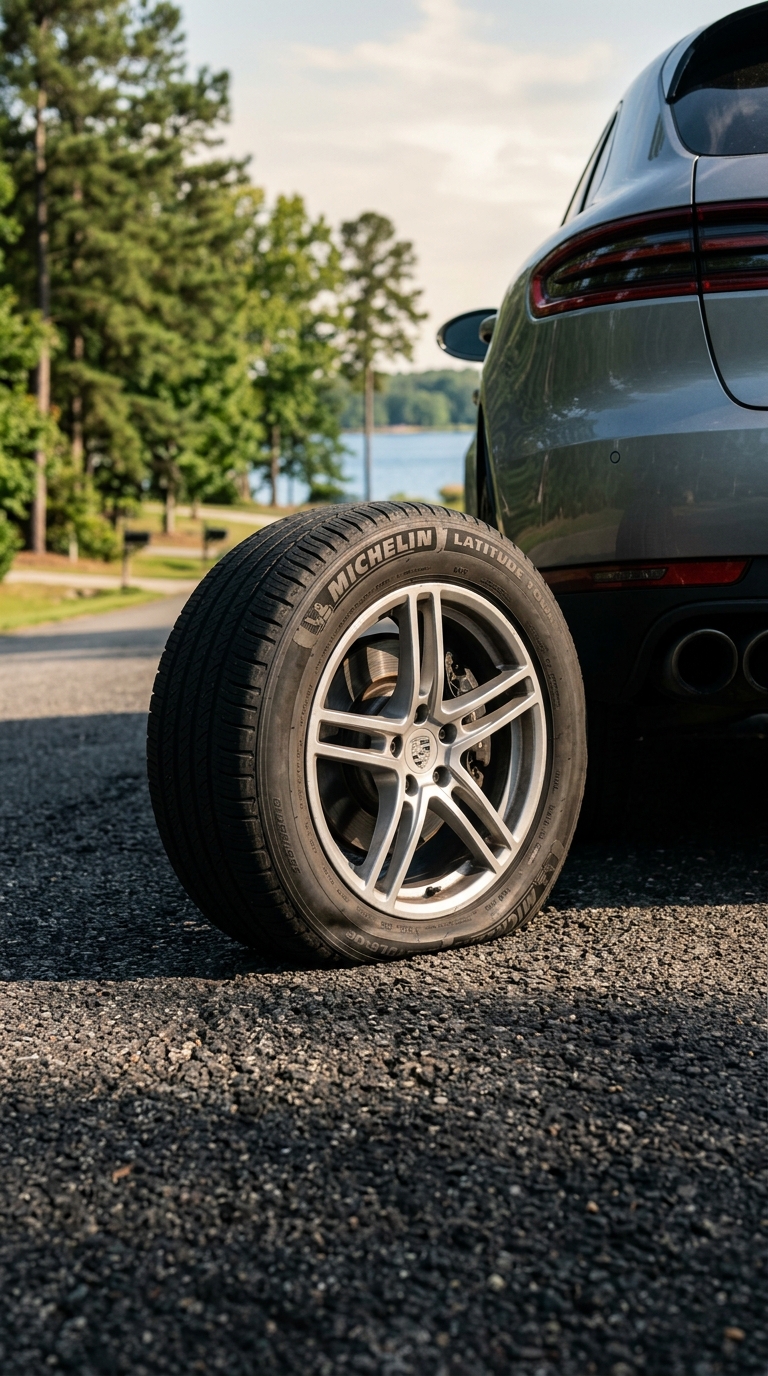
 

To understand why low pressure is dangerous, you must understand the role of the tire’s sidewall. A tire is designed to maintain a specific shape under the weight of the vehicle. When air pressure drops, the sidewall loses its structural integrity and begins to flex excessively as the tire rotates. This constant bending and stretching generates friction at a molecular level within the rubber compounds.

This friction translates directly into heat. Tires are resilient, but they have a thermal limit. When a tire is under-inflated, the heat buildup can become so intense that the chemical bonds holding the rubber and internal steel belts together begin to degrade. This is the primary cause of a ‘blowout’—a sudden, explosive loss of air that often occurs at high speeds when the tire can no longer withstand the internal temperature. If you ever feel your steering wheel vibrating or smell burning rubber, you may be experiencing the early stages of thermal failure. Our parts center at Modern Nissan of Lake Norman stocks high-quality replacements if your tires have already suffered heat damage.


AI generated: Automotive photography, low-angle ground-level shot focusing on a modern vehicle's rear tire visibly under-inflated and sagging against the dark asphalt, sharp detail on the rubber texture and tread, North Carolina suburban road setting, soft bokeh background featuring lush green pine trees and a hint of a shimmering lake under a hazy afternoon sky, dramatic natural lighting with long shadows, cool gray pavement tones contrasted by warm metallic highlights on the silver car body, cinematic and cautionary mood, realistic textures, high-resolution detail, professional car commercial aesthetic.

Compromised Control: How PSI Affects Handling and Braking

Increased Stopping Distance


A soft tire has a larger, ‘floppier’ footprint. While you might think more rubber on the road is better, under-inflation actually reduces the pressure applied to the center of the tread, leading to longer braking distances, especially in emergency situations.


Reduced Steering Precision


When you turn the steering wheel, you rely on the tire’s sidewall to transfer that force to the road. If the sidewall is soft, there is a delay between your input and the car’s reaction. This ‘sloppy’ handling can be fatal during sudden swerves.


Hydroplaning Risk


North Carolina rainstorms can be intense. Under-inflated tires cannot effectively channel water away through their grooves. This causes the tire to ‘float’ on top of the water, leading to a complete loss of traction known as hydroplaning.


The Financial Toll: Fuel Economy and Accelerated Tread Wear


Safety isn’t the only concern; your wallet takes a hit every mile you drive on low tires. Under-inflation increases ‘rolling resistance.’ Think of it like trying to ride a bicycle with flat tires—you have to pedaling much harder to maintain speed. Your engine has to work harder to overcome this resistance, which can drop your fuel economy by as much as 3% to 5%. In a world of fluctuating gas prices, that is money literally disappearing into thin air.

Furthermore, low pressure causes the outer edges of the tire (the shoulders) to make more contact with the road than the center. This results in uneven wear, meaning you’ll be shopping for new vehicles or at least new tires much sooner than expected. If you have noticed your tread wearing thin on the edges, it is time to schedule service at Modern Nissan of Lake Norman for a professional inspection and alignment check.


Is it time for a fresh start? If your current vehicle is costing too much in repairs, you can apply for financing at Modern Nissan of Lake Norman and upgrade to a newer, safer model today.


Decoding Your Dashboard: Understanding the TPMS Warning


Since 2008, all new vehicles have been required to have a Tire Pressure Monitoring System. However, not all TPMS warnings are the same. If the light is solid, it typically means one or more of your tires has dropped at least 25% below the recommended manufacturer pressure. This requires immediate attention.

If the light flashes for 60 to 90 seconds when you start the car and then stays solid, it often indicates a malfunction with the system itself—perhaps a dead sensor battery or a communication error. Regardless of the pattern, you should never ignore it. Even if the tires look ‘fine’ to the naked eye, modern radial tires can be significantly under-inflated without looking flat. Always trust the sensor or a manual gauge over a visual guess.


Cornelius Climate Factors: How NC Weather Impacts Your Tires


Living in the Lake Norman area means experiencing the full breadth of North Carolina’s seasonal shifts. These temperature fluctuations have a direct physical impact on your tire pressure. The rule of thumb is simple: for every 10-degree drop in ambient temperature, your tires will lose approximately 1 PSI.

During a crisp Cornelius spring morning, you might wake up to a TPMS light that disappears once you’ve driven a few miles and the tires have warmed up. This is because the air inside the tire expands as you drive. However, if the light comes on in the morning, it is a sign that your ‘cold’ pressure is too low. You should always set your pressure based on the ‘cold’ reading—before the car has been driven more than a mile—to ensure you are protected against the heat of a Carolina afternoon.


Lake Norman Pro-Tip: As we transition into summer, the pavement on Statesville Road and surrounding streets can reach scorching temperatures. This makes the ‘heat buildup’ issue even more dangerous for under-inflated tires. Don’t wait for a blowout on your way to the boat ramp—check your tires monthly!


Manual Inspection Guide: How to Check PSI Like a Pro


Step 1: Find Your PSI. Open your driver’s door and look for the yellow and white sticker on the jamb. This lists the exact PSI recommended for your specific Nissan model. Do not use the ‘Max PSI’ listed on the tire sidewall itself.


Step 2: Check Cold. Use a quality digital or stick gauge. Remove the valve cap, press the gauge firmly onto the stem, and note the reading. If it’s below the placard number, you need air.


Step 3: Inspect the Tread. While you’re down there, look for nails, cracks in the sidewall, or uneven wear. If the center is worn more than the edges, you’ve been driving with too much pressure!


Visit Modern Nissan of Lake Norman for a Safety Check


At Modern Nissan of Lake Norman, we know you want to purchase and maintain your vehicle risk-free. That’s why we offer our SmartBuy Pre-Owned Vehicles, where “Confidence Comes Standard”. Whether you are driving a brand new Nissan or a Gold-certified pre-owned vehicle, our service team is here to ensure your tires are in peak condition.

We provide professional reconditioning, 150-point quality assurance inspections, and even complimentary NC State Inspections for life for our customers. If your TPMS light is giving you trouble, don’t guess—visit us in Cornelius for a comprehensive safety check. We are located at 18615 Statesville Rd, Cornelius, NC 28031. Get directions to Modern Nissan of Lake Norman and let us help you experience the Modern Difference.


Slow Leaks vs. Sharp Punctures: Identifying the Cause
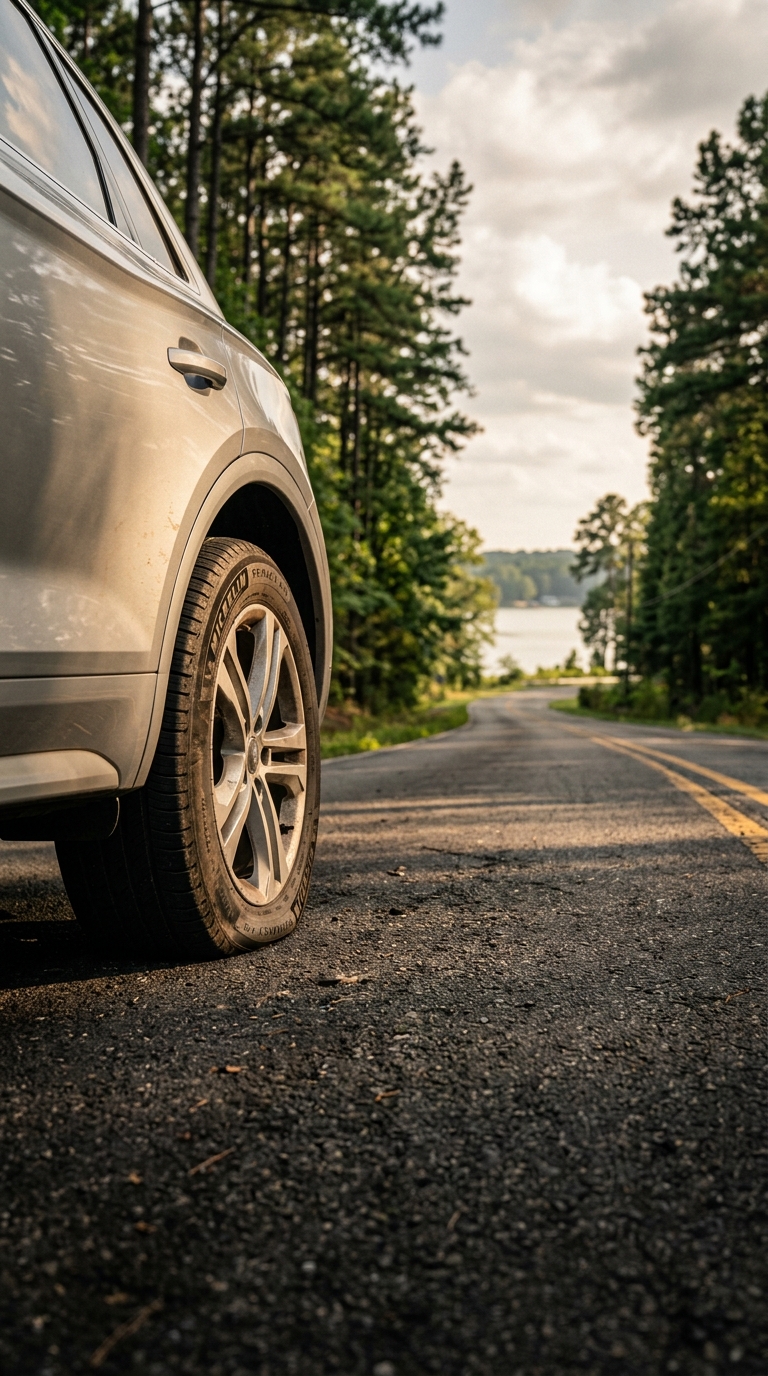
 

Not all pressure loss happens overnight. A sharp puncture from a nail or road debris usually causes a rapid drop in pressure that is immediately noticeable. If the puncture is in the center of the tread and smaller than 1/4 inch, it can often be repaired by our technicians.

However, slow leaks are more insidious. These can be caused by a faulty valve stem, a corroded rim bead, or a tiny ‘pinhole’ puncture. Even a bent rim from hitting a North Carolina pothole can cause a slow leak that bypasses the tire’s seal. If you find yourself adding air every week, you have a mechanical failure that needs professional attention. Ignoring a slow leak can lead to the ‘hidden’ internal damage discussed in the next section.


AI generated: Automotive photography, low-angle ground-level shot focusing on a modern vehicle's rear tire visibly under-inflated and sagging against the dark asphalt, sharp detail on the rubber texture and tread, North Carolina suburban road setting, soft bokeh background featuring lush green pine trees and a hint of a shimmering lake under a hazy afternoon sky, dramatic natural lighting with long shadows, cool gray pavement tones contrasted by warm metallic highlights on the silver car body, cinematic and cautionary mood, realistic textures, high-resolution detail, professional car commercial aesthetic.

The ‘Hidden’ Internal Damage of Driving Flat

Sidewall Creasing


When a tire is driven while flat or nearly flat, the heavy metal rim literally pinches the rubber sidewall against the road. This creates a permanent crease in the internal structure that cannot be repaired.


Internal Rubber Dust


If you take a tire off the rim and find ‘rubber dust’ or shavings inside, the tire is toast. This dust is the result of the internal liner being shredded by the heat and friction of under-inflated driving.


Bead Separation


The ‘bead’ is the edge of the tire that sits on the rim. Low pressure can cause the tire to shift on the rim, damaging the bead and making it impossible for the tire to hold a seal ever again.


Choosing the Right Tires for Your Nissan


If your tires are showing signs of age or have been damaged by low-pressure driving, choosing the right replacement is critical. For the Charlotte metro area, most drivers benefit from all-season tires, which provide a balance of performance in our hot summers and occasional wintry mix. However, if you drive a performance model like the Nissan Z or a rugged PRO-4X Frontier, you may want specialized rubber that matches your lifestyle.

Our parts experts can help you select tires that maximize quietness, fuel efficiency, or off-road grip. Check out our used vehicles if you’re looking for a vehicle that already comes with a fresh set of certified tires!


Emergency Protocol: What to Do if a Tire Fails on the Highway


If you experience a sudden loss of pressure or a blowout while driving, the most important thing is to remain calm. Do not slam on the brakes; this can cause the vehicle to pull sharply toward the flat tire and lead to a rollover. Instead, maintain a firm grip on the steering wheel, ease off the accelerator, and let the vehicle’s natural momentum slow you down while you steer toward the shoulder.

Once safely stopped, activate your hazard lights. If you have a ‘Fix-a-Flat’ kit, remember it is only a temporary measure to get you to the nearest shop. If you have a spare tire, ensure you are on level ground before attempting to change it. Note that most ‘doughnut’ spares are only rated for 50 miles at 50 mph. Your final destination should always be a certified technician for a permanent solution.


Warning: Never change a tire on the side of a busy highway like I-77 if you are not safely away from traffic. Your life is worth more than a rim. Call for roadside assistance if the situation is unsafe.


Comprehensive Tire Maintenance at Modern Nissan


Proper tire maintenance goes beyond just checking the air. To get the most out of your investment, you should follow a regular schedule of rotations, balancing, and alignments. Rotations ensure that all four tires wear evenly (since the front tires handle most of the steering and braking force). Balancing prevents vibrations that can damage your suspension, and alignments ensure your tires are pointing exactly where they should be.

At Modern Nissan of Lake Norman, our technicians use state-of-the-art diagnostic tools to ensure your vehicle is perfectly calibrated. We don’t just fill your tires; we inspect the entire ecosystem that keeps your car on the road.


Schedule Your Tire Service in Cornelius Today


Driving on low tire pressure is a risk to your safety, your vehicle’s longevity, and your bank account. Don’t let a simple maintenance task turn into a major repair. Whether you need a quick pressure check, a patch for a slow leak, or a brand new set of premium tires, the team at Modern Nissan of Lake Norman is ready to serve you.

Join the thousands of satisfied customers in Cornelius, Mooresville, and Huntersville who trust us with their automotive needs. Click the button below to secure your appointment time and drive with the confidence you deserve.


Posted in Nissan Service